FUEL CELL ELECTRIC
VEHICLES (FCEVs)
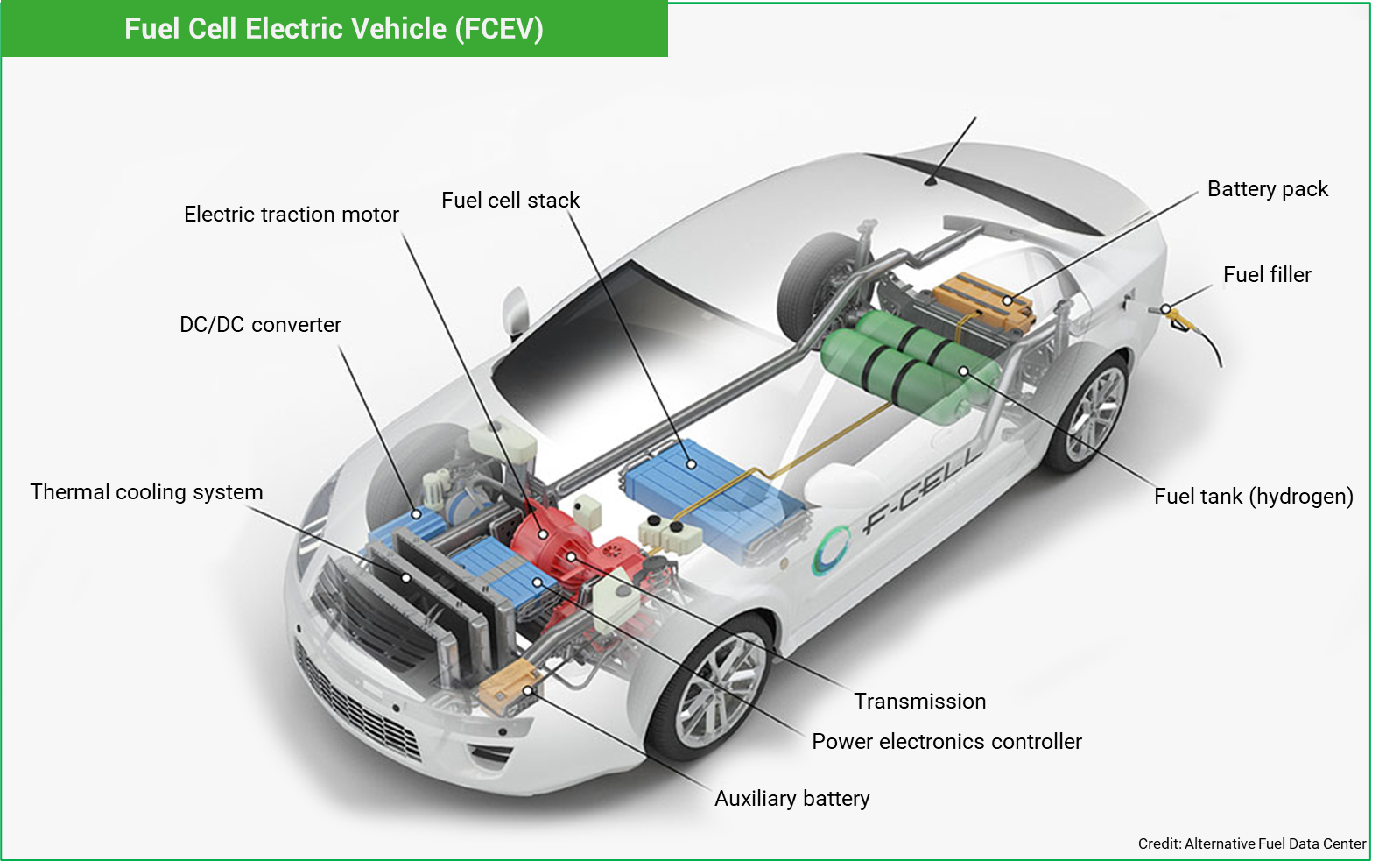
Fuel Cell Electric Vehicles (FCEVs) create zero tailpipe
emissions powered by hydrogen. An
FCEV uses a similar system as a
Battery Electric Vehicle to run the
vehicle. In the case of an FCEV, the energy is stored as hydrogen and then converted into electricity by the fuel cell to propel the vehicle. Fuel Cell Electric
Vehicles have a gas tank used to store the pure hydrogen; the tank can be fuelled up in just a few minutes, similar to how
conventional ICE vehicles are filled up today.
FCEVs
can reach around 300 miles on one tank of pure hydrogen. They also utilize
regenerative braking technology and capture energy lost during braking, which is stored in a battery pack. There
are a limited number of production FCEVs available to the public, and as of
today, the refuelling infrastructure isn’t anywhere near where it needs to be
to support a mass rollout of FCEVs.
EXAMPLES OF FUEL CELL ELECTRIC
VEHICLES (FCEVs)
BMW iX5, Honda Clarity, Hyundai Nexo, Hyundai Nexo Blue, Hyundai Staria Fuel Cell, Ineos Grenadier Hydrogen, Kia FK, Land Rover Defender Fuel Cell, Range Rover FCEV, Toyota Mirai LE, Toyota Mirai Limited, Toyota Mirai XLE.